ASN BANk | Service strategy
Redesigning the end-to-end journey for reporting a death
As a bank, ASN needs to be informed when a customer passes away to handle customer data, accounts and products in line with legal requirements. This information is provided by relatives through the ‘reporting a death’ service.
In this customer journey project, we redesigned this service to better support both customers and employees. I led the service design and development, shaping the future customer journey, service concepts and implementation direction.
GOAL
Redesign the ‘reporting a death’ journey to better support relatives while increasing operational efficiency.
OUTCOME
A future-proof service journey introducing a ‘fast-lane’ for faster, simpler and first-time-right handling of cases, helping relatives regain access to funds more quickly.
MY ROLE
Lead Service Design, Concept design, UX design, Communication, User research, Stakeholder management
COMPANY
ASN Bank
The project
Reporting a death is an emotionally heavy moment for customers. Within the bank, this journey was fragmented across teams and systems, leading to inefficient proceses, long lead times, an increase of customer complaints and a decrease in employee experience.
As lead service designer, I shaped the end-to-end service from ideation and concept development to service mapping and implementation. I streamlined to journey to help relatives navigate it more easily, reduce friction and improve handling speed for employees. I shaped the service concepts and implementation direction, ensuring alignment with CX, operations, IT, legal and compliance. This led to a service that is empathic for customers, but also operationally feasible and compliant with regulations.
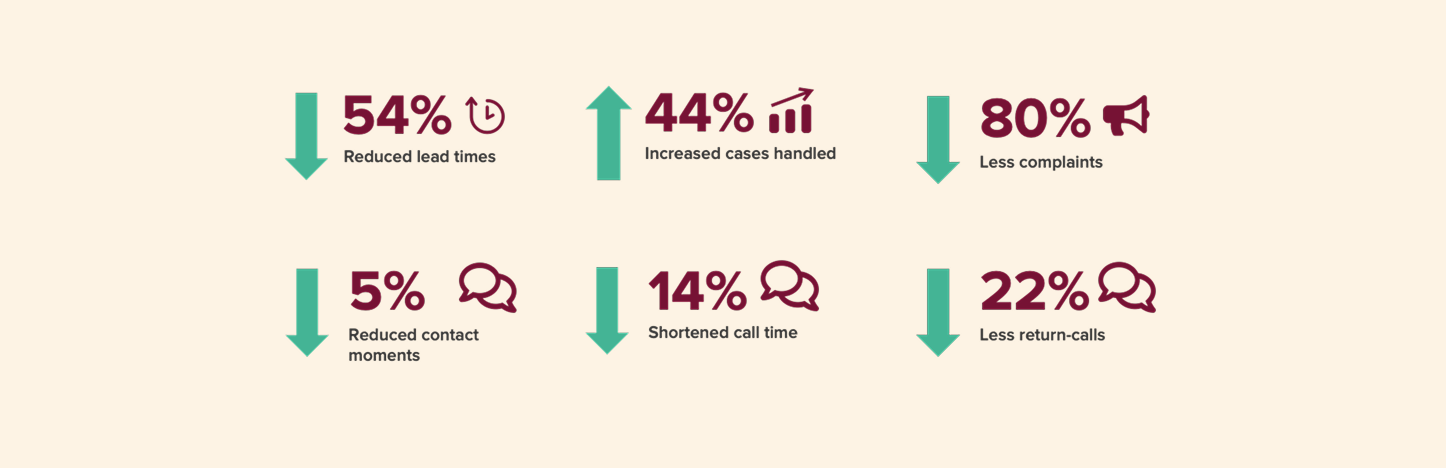
I also led the development and implementation of initial quick wins, collaborating closely with UX, content, and IT to integrate improvements across the journey. These quick wins reduced lead times by 50% and customer complaints by 80%. The full service model is currently being implemented into our processes.
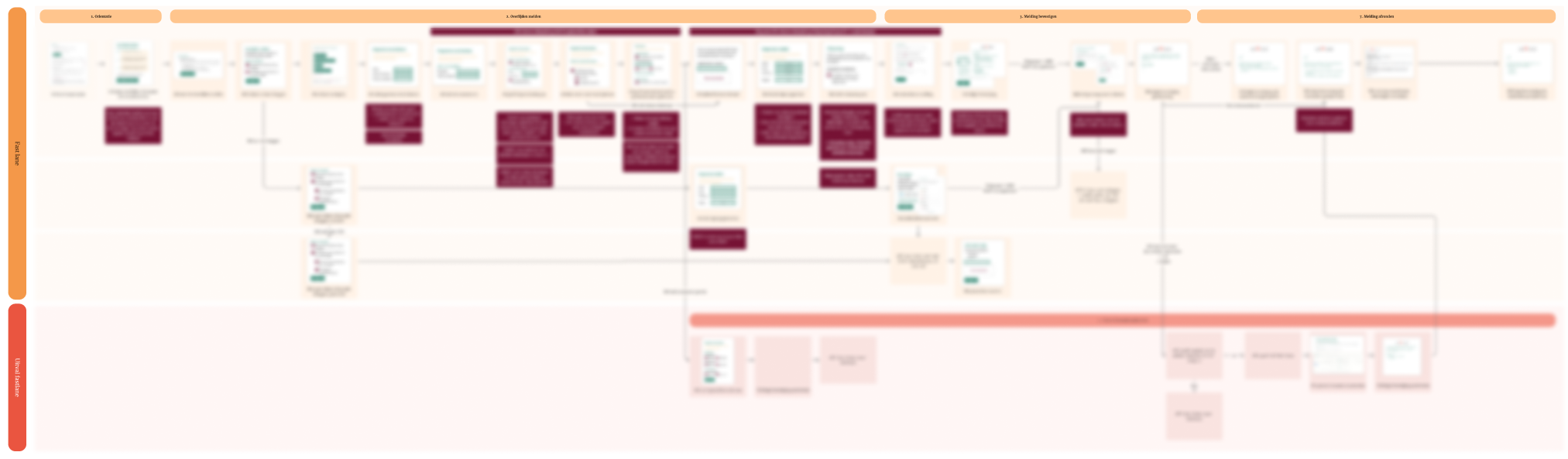
Note: images in this case are blurred for confidentiality reasons.
Research & insights
Together with our UX research lab, I explored the current “reporting a death” journey from the perspective of relatives. We interviewed multiple people who had previously reported a death at Dutch banks to understand their needs and expectations.
Research revealed that relatives value personal contact during this emotional time and appreciate genuine human compassion rather than formal interactions. They also need a clear, step-by-step plan to guide them through the process, as they were already faced with so much to take care of.
In addition, we analysed customer contact and complaints within our own service. This showed that long waiting times, delays and lack of clarity fuelled frustration in relatives. Relatives often felt uncertain due to missing feedback or instructions, leaving them unsupported throughout the process.
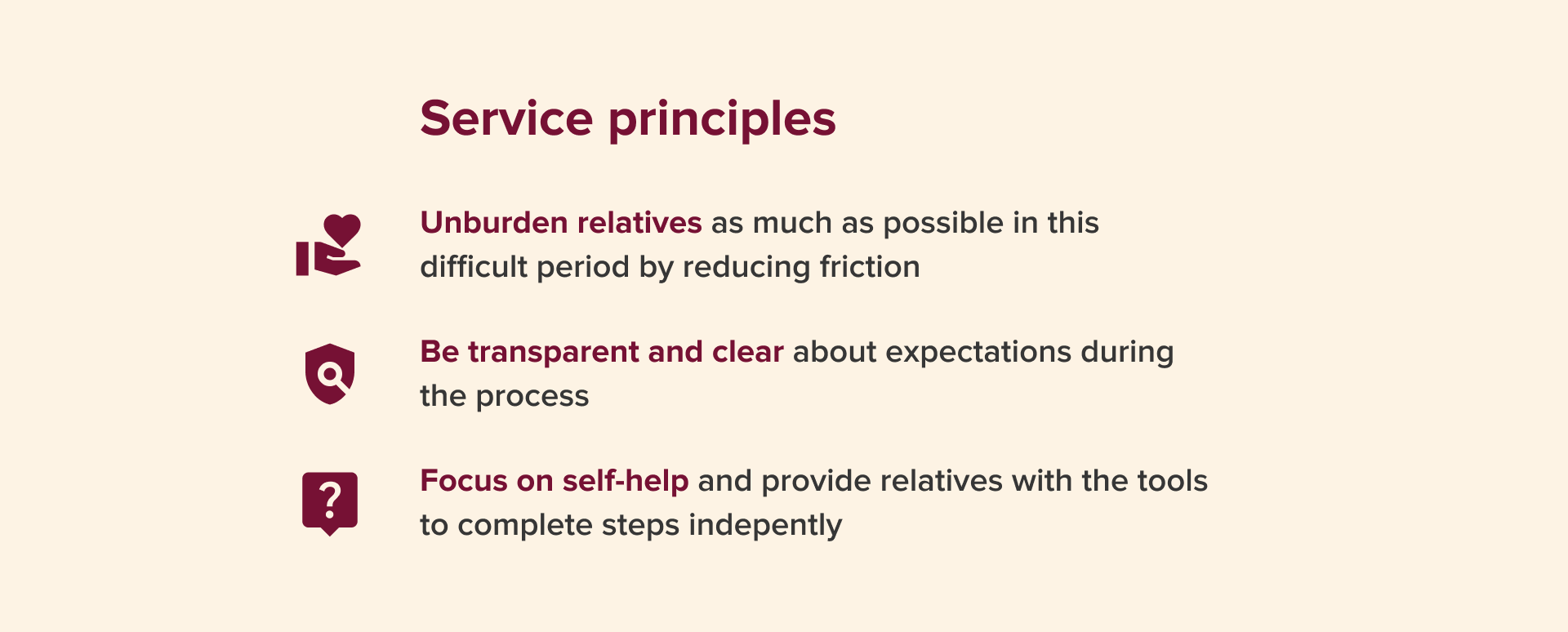
I translated these research insights into three guiding service principles that steered design decisions and created a shared understanding with stakeholders throughout the project
Journey mapping
Together with the Customer Journey Manager, I mapped the as-is customer journey integrating insights from our research. We used this journey as a conversation tool in our cross-functional workshops with CX, operations and IT.
This revealed a major “black box” in the journey: after relatives submitted all required information, they experienced long periods of silence while employees processed the case. During this phase, employees often had to go back and forth with customers due to missing or incorrect information, causing delays, frustration and uncertainty on both sides.
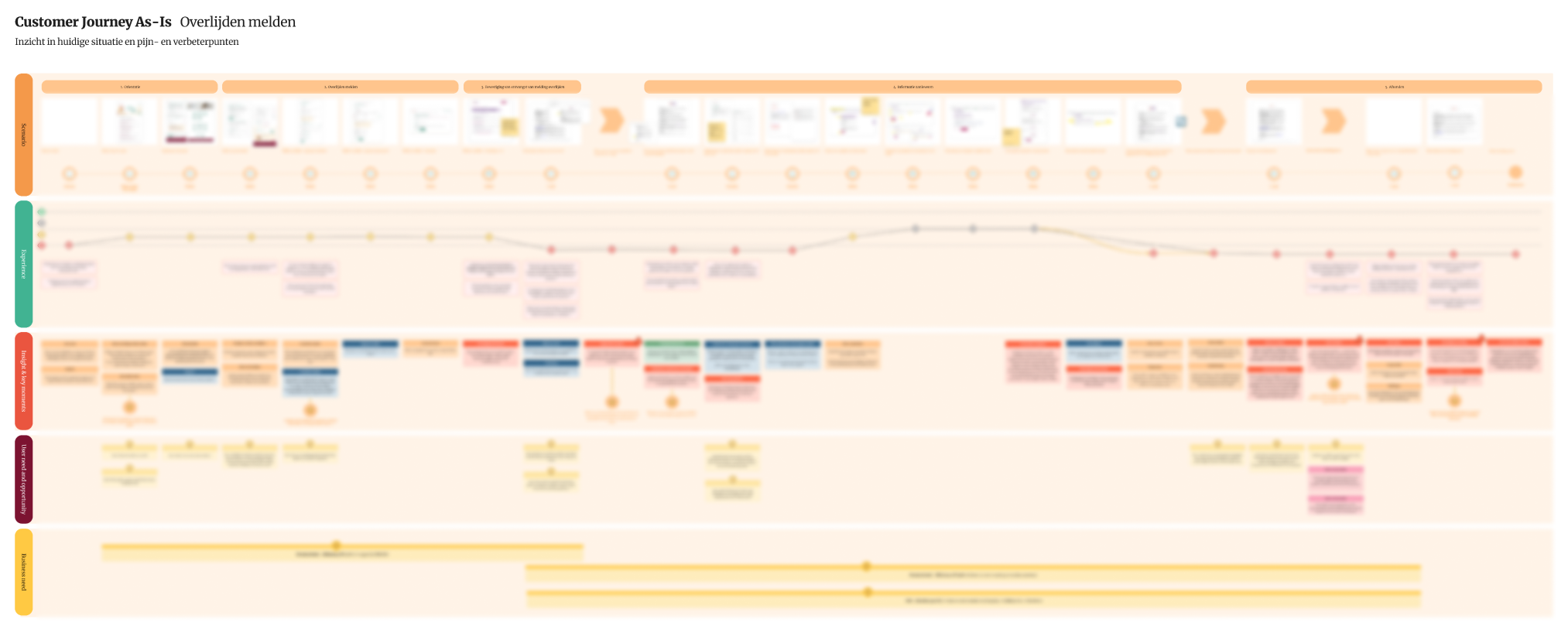
We transformed these insights into an updated customer journey and employee journey. We also interviewed several employees about their day-to-day tasks and constraints. This allowed us to pinpoint the areas in the journey that required improvement.
Service design
Building on the journey insights, the Customer Journey Manager and I co-led ideation sessions to generate improvement ideas across the full customer journey, bringing together perspectives from CX, UX, content, behavioural design, process management and IT.
To move from ideas to impact, I structured and prioritised ideas based on value versus effort, identifying which improvements would deliver the most customer and operational value in the short and long term.
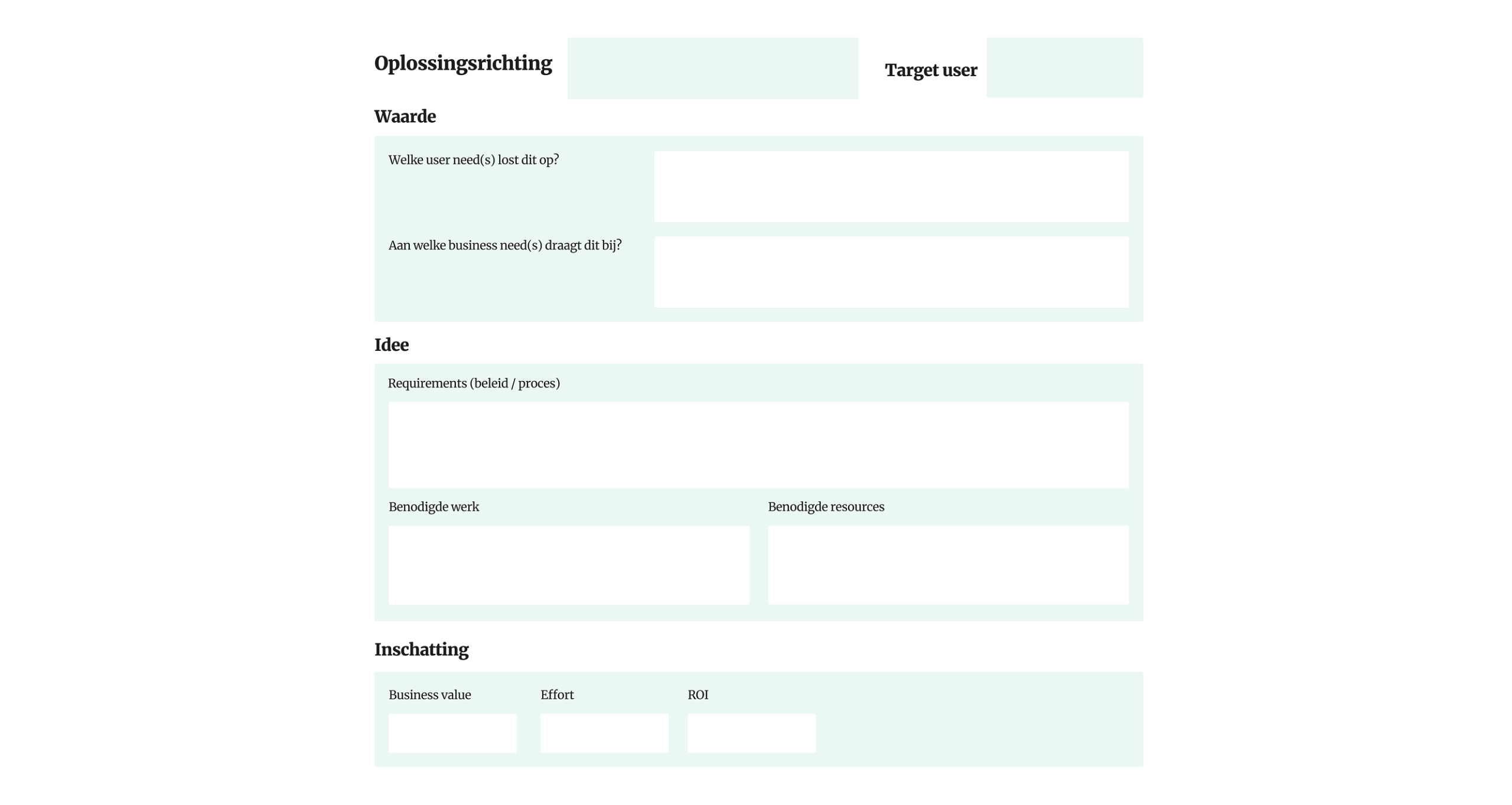
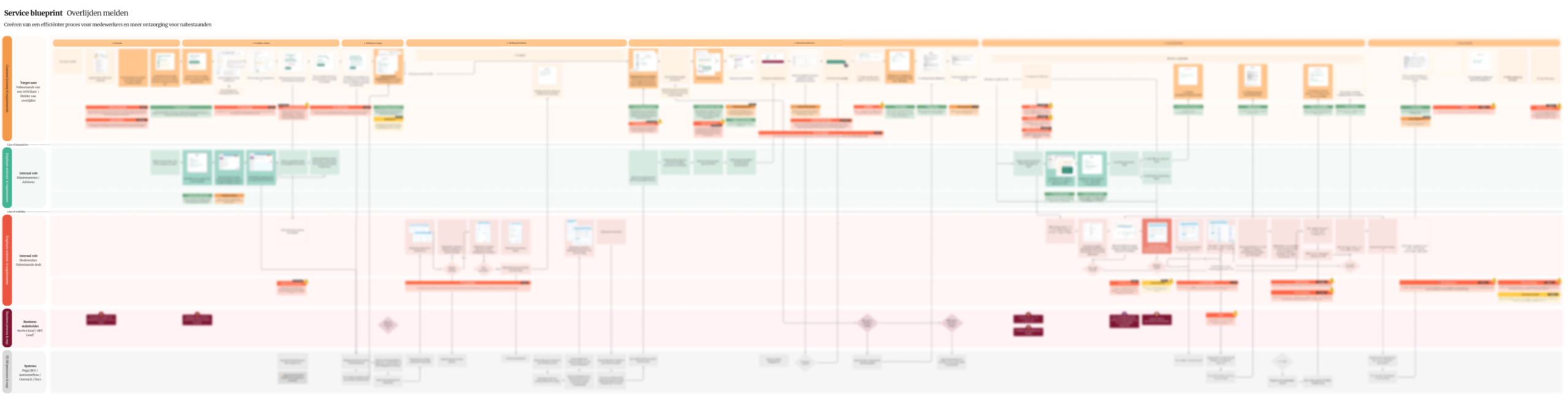
I then mapped the most promising concepts into a service blueprint to validate feasibility across processes, systems and compliance. This helped make dependencies, constraints and feasibility explicit, and supported decision-making with IT and process management. Through further refinement we decided on a top 10 of quick-win ideas that became the focus of the first part of our project.
Next, I took the lead in orchestrating the implementation of the quick wins, ensuring a coherent service experience across touchpoint and supporting the further development of the ideas.Working closely with UX, content, IT, and operations, I created and integrated a clear content strategy, including a clear step-by-step guide on the website and improved feedback for relatives. This included aligning website-wide content with our new proces. We also enhanced work instructions, helplines for customer service, and improvements to the existing process such as the digital document portal.

Service concept & strategy
In parallel, I led the development of a robust future customer journey. In a final co-creation session with the Customer Journey Manager, we re-designed the service to better meet customer needs while improving operational efficiency and aligning with legal policies.
This resulted in the concept of a ‘fast lane’, enabling over 50% of all cases (simple cases based on our internal policies) to be handled faster and more efficiently. Simultaneously, it will help relatives to regain access to funds more quickly, reducing waiting time and uncertainty.
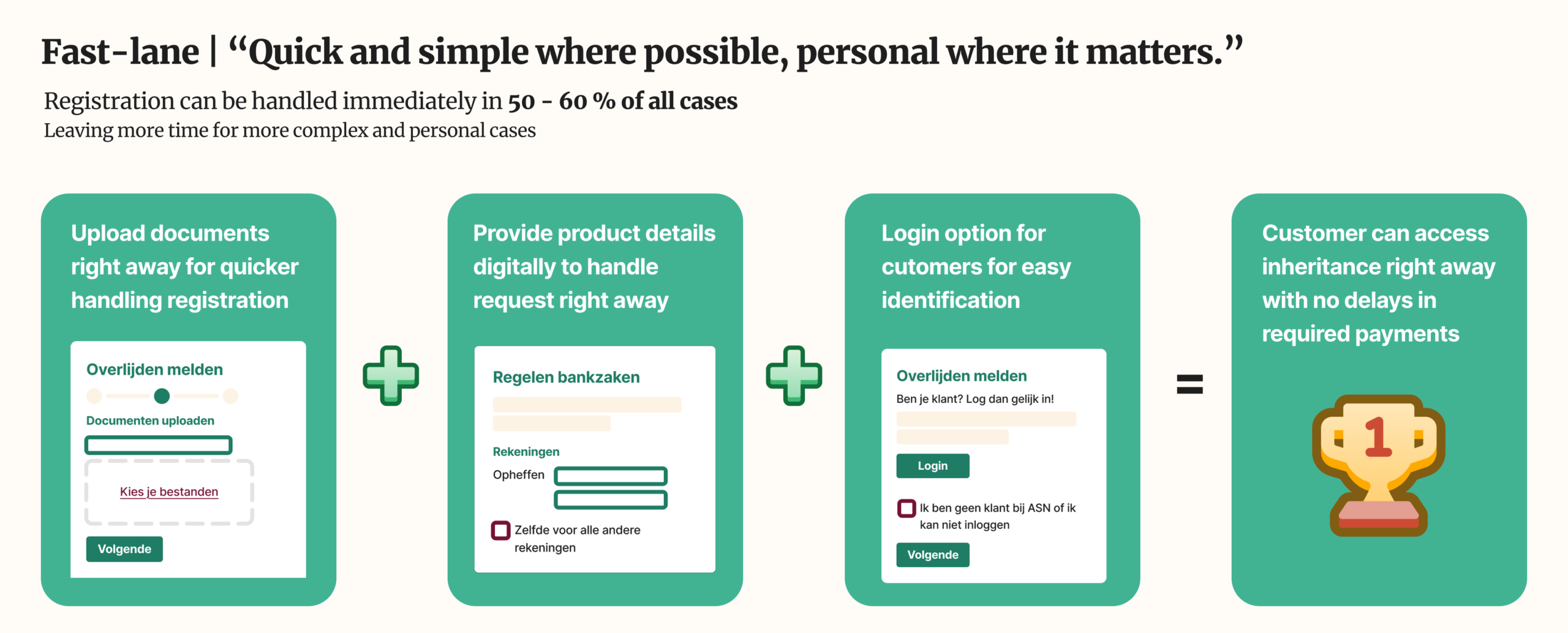
I then took ownership of shaping this concept into a detailed service strategy. I created multiple concept flows to for validation with internal processes and policy stakeholders at a granular level, allowing for easy iteration. These flows were consolidated into a full service journey, including employee processes and IT systems, to evaluate the impact of our proposed improvements and inform a phased implementation plan.
The result
During the first phase of the project, I led the development and implementation of quick-win improvements. We refined the content strategy to provide clear instructions and feedback, improved work instructions, helplines for customer service and UX improvements to the process. This resulted in significant improvements to our key metrics over just a few months.
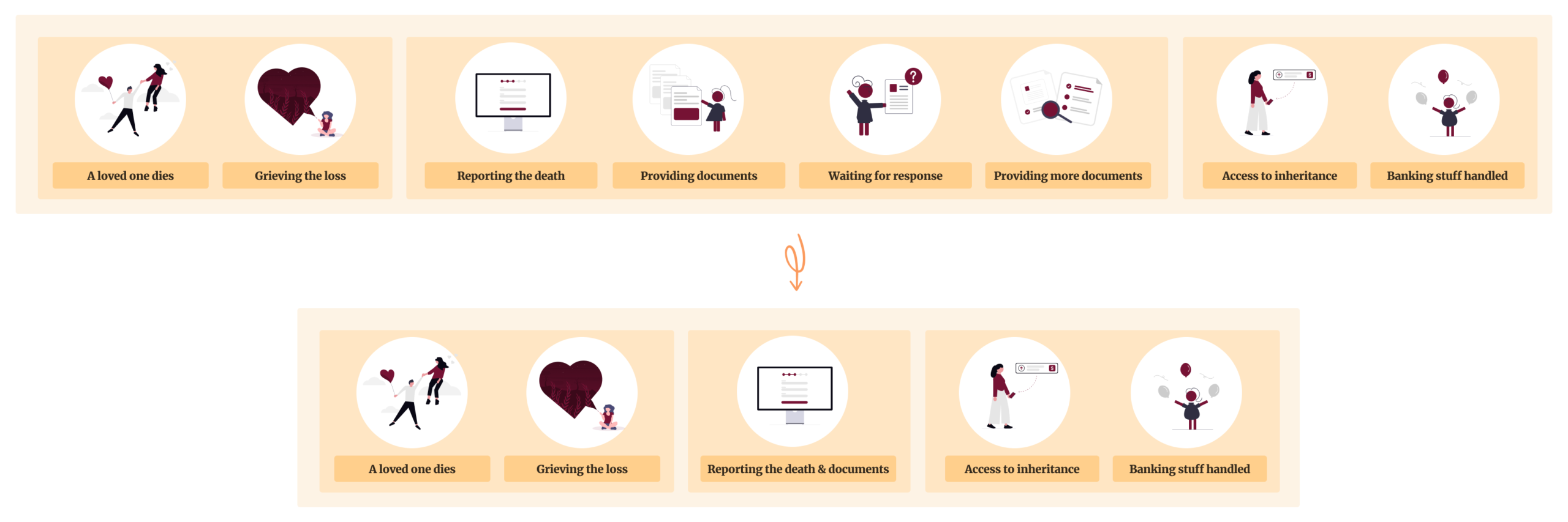
I am currently refining the future service concept in collaboration with UX design to enable validation and testing. Simultaneously, I am working with the team to integrate the future service direction into the product backlog and delivery roadmap.
This ongoing case aims to evolve the journey from a validated concept into a scalable, future-proof service model that balances customer empathy with operational efficiency.
My activities
- Service design & strategy
- Customer journey & service blueprint mapping
- Facilitate co-creation workshops
- Service concept design & implementation
- Cross-disciplinary team coordination (UX, content, IT, process)
- Content strategy & creation
- Phased implementation planning
- Customer research & validation